
What Affects Tree Removal Cost in Colorado Springs?
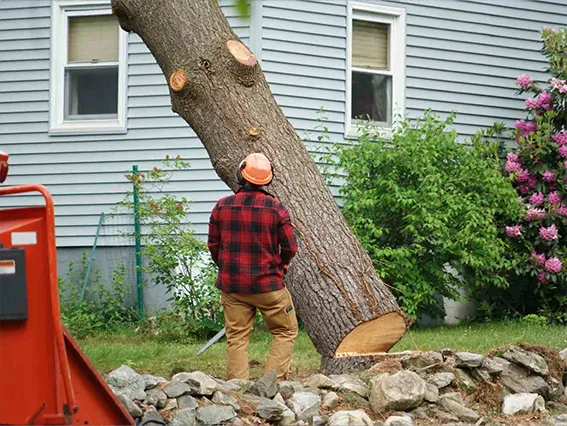
The short answer
Most residential tree removals in Colorado Springs run somewhere between about $350 and $2,500, with a straightforward mid-size tree often landing around $750. Big trees near a house or a power line, trees on a steep lot and trees that need a crane go well past that, often $1,500 to $4,000 and up.
Those are market ranges, not a quote. Two companies can look at the same tree and be $800 apart, and the gap usually comes from the factors below. Once you know them, you can read a quote and tell whether it’s priced for the real job.
Typical market cost by tree height
Height is the starting point because it sets the equipment, the rigging and the hours.
| Tree height | What it usually involves | Typical market range |
|---|---|---|
| Under 30 ft | Ornamentals, young pines, overgrown shrubs. Often dropped in one piece. | about $350 to $650 |
| 30 to 60 ft | Most backyard cottonwoods, spruce and ponderosa. Climbing or a lift, sectioned down. | about $650 to $1,500 |
| 60 to 80 ft | Mature trees that need a bucket truck or serious rigging. | about $1,500 to $2,500 |
| Over 80 ft, or crane work | Big ponderosa and cottonwood, tight sites, sectional removal over structures. | about $2,500 to $4,000 and up |
Height is not the whole story. A 45-foot tree alone in a front yard and the same tree wedged between a shed, a fence and a gas line are two different jobs. The rest of this post covers what moves the number inside those ranges.
For size-specific breakdowns, see the cost to remove a 20 ft tree, the cost to cut down a 40 ft tree and the cost to cut a 100 ft tree.
Species: some trees fight every cut
Colorado Springs yards hold a mix of soft and hard wood, and species changes the labor.
| Species | Removal difficulty | Why |
|---|---|---|
| Cottonwood | Low to medium | Soft, predictable wood, but often huge with a wide canopy |
| Blue spruce | Medium | Dense branching, sap |
| Ponderosa pine | Medium to high | Height, weight, pitch |
| Gambel oak | High | Dense wood, many stems |
| Siberian elm | High | Brittle wood, aggressive roots |
| Russian olive | Very high | Thorns, dense wood, spreading roots |
Canopy spread matters too. A cottonwood with a 50-foot spread takes far longer to bring down safely than a narrow spruce of the same height. If you’re removing several trees of different kinds, a quote that prices them all at one flat rate isn’t looking at the trees.
Location on the property
Where the tree stands is often the biggest swing factor after height.
- Near the house, garage or fence. The tree can’t just be felled. It gets taken down from the top in pieces, each one lowered on a rope. That takes two to three times as long as dropping a tree in the open.
- Near power lines. Call Colorado Springs Utilities before anyone works near the lines. Depending on how close the tree is, the utility may need to be involved or may handle limbs touching the lines themselves. Never let anyone cut a tree touching or near a power line without that call.
- On a slope. Lots on the west side of town and up into the foothills have real grade. Pieces can’t be dropped freely because they roll, so more of the work is rigged.
- Backyards with no truck access. If a chipper can’t get close, the debris gets carried by hand. That adds hours to every job.
Condition: dead trees cost more, not less
People expect a dead tree to be cheaper. It usually isn’t. Healthy wood behaves the way you expect it to. Dead or rotten wood doesn’t. Limbs let go without warning, trunks split mid-cut and the roots may already be failing.
Conditions that raise the price:
- Storm damage with hanging limbs, which have to be dealt with before anyone works underneath.
- Root rot or fungus at the base, which means the tree can fail during removal.
- A lean toward a structure, which needs rigging to pull it the other way.
- Beetle kill. Bark beetles have killed a lot of ponderosa across El Paso and Teller counties, and a beetle-killed pine can look solid and be hollow inside.
Standing dead pine near a house is also fire fuel. If you have it, get it handled before fire season rather than after a windstorm drops it on the roof.
Access: the cost nobody thinks about until the truck shows up
Tree work leans on equipment: a chipper that parks near the work, a bucket truck or crane that needs a level approach and clearance, and sometimes a skid steer or mini excavator for stumps. A narrow driveway, a low gate, steep grade or soft ground means the job has to be done the slow way.
This is why an honest quote starts with someone walking the access path, not just looking at the tree. A number given over the phone is a guess, and guesses turn into change orders.
Stumps, debris and what’s in the quote
Most quotes cover cutting the tree down. Ask about everything after that:
- Stump grinding. Usually priced separately. A grinder takes the stump down 6 to 12 inches below grade and leaves the roots to rot in place. That’s fine for lawn or garden.
- Full stump and root removal. Needed when the stump sits where a foundation, driveway or septic field is going. The stump and root ball get dug out with an excavator and the hole gets filled and graded. This costs more than grinding, but grinding a stump that sits under a future slab means paying to dig it out later anyway.
- Chipping and haul-off. Some contractors leave the wood and brush piled on your property. Get it in writing either way.
The single most common billing surprise is assuming stump grinding and haul-off were included.
Permits and rules in Colorado Springs
Most tree removal on private residential property in Colorado Springs doesn’t need a city permit. The exceptions:
- HOAs. Many neighborhoods, especially newer ones, require approval before you remove a tree. The fine can be more than the removal.
- Public right-of-way and easements. Trees in the strip along the street or on an easement may belong to the city or a utility. Check with the city before touching them.
- Utility lines. As above, call Colorado Springs Utilities first.
If you’re unsure, a call to the city and your HOA costs nothing.
Ways to bring the cost down
- Bundle trees. Getting equipment to your property is a big part of the cost. Three trees on one visit cost less per tree than three separate visits.
- Schedule in the slow season. Late fall and winter are usually slower for tree crews, so prices and scheduling can be better.
- Clear the access. Move vehicles, open gates and clear a path for the chipper.
- Keep the wood. If you heat with wood, ask for it cut to rounds and left. That can cut the haul-off cost.
Be careful with quotes far below everyone else’s. They often mean no insurance, a crew without the right equipment or a scope that leaves out stumps and debris. Ask every bidder for proof of liability insurance.
When tree removal is really the first step of a bigger job
If the trees are coming down because you’re building, putting in a driveway or installing a septic system, tree removal is the start, not the job. After the trees are down you still have stumps, roots and disturbed ground that has to be graded and compacted before anyone can build on it.
That’s where hiring separate tree, stump and grading contractors gets expensive. The tree crew leaves stumps the excavator then has to dig. The grade isn’t right for the foundation. Someone comes back to fix it. One operator who removes the trees, pulls the stumps and grades the site in order avoids paying twice. See our land clearing services, and if you’re pricing a whole lot, our guide to the cost to clear an acre of land.
What Dotts actually charges
Dotts focuses on bigger removals: hazard trees near houses, garages and power lines, large pines that need rigging or a crane, and trees that are part of clearing a lot or prepping a site. We don’t quote jobs under $3,000. A single small tree in an open yard usually costs less than that no matter who you hire, and a local tree service is the better call for it. If your job is a hazard tree, several big trees or clearing for a build, call (719) 280-4141 and Michael will walk it and tell you straight whether it’s a fit. See our tree removal services for what we take on.
Common questions
How much does it cost to remove a tree in Colorado Springs? Most residential trees run about $350 to $2,500, with a standard mid-size removal often around $750. Large or hazardous trees near structures can reach $4,000 or more.
How much for a small tree? Trees under 30 feet with open access typically run about $350 to $650.
Is stump grinding included? Usually not. Ask in writing.
Does homeowners insurance pay for tree removal? Often when a tree falls on an insured structure in a storm, minus your deductible. Removing a dead or leaning tree before it falls is usually treated as maintenance and isn’t covered. Check your policy.
How long does it take? A standard residential removal often takes a few hours. Large or hazardous removals can take a full day or more.
Can I do it myself? Small trees under about 20 feet with a clear drop zone, maybe. Anything near a house, a fence or a power line, no. Our post on whether you can remove a tree yourself in Colorado Springs walks through where the line is.
Get a number that holds
Michael Dotts walks your property, looks at the trees, the access and what comes after, and puts a written bid in your hands within 24 hours. Call or text (719) 280-4141, or send the form below.